|
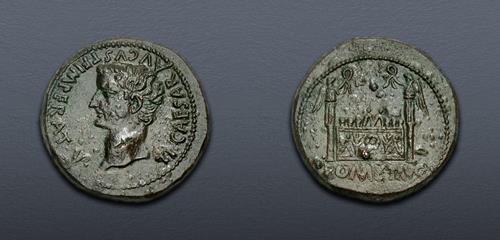
Tiberius. As Caesar, AD 4-14. Æ As (28mm, 13.33 g, 11h). Lugdunum (Lyon) mint. Struck under Augustus, AD 10. Good VF.
CNG Feature Auction 133
Lot: 539. Estimated: $ 500
Roman Imperial, Bronze, Coin-in-Hand Video
Sold For $ 600. This amount does not include the buyer’s fee.
Go to Live
|
|
Tiberius. As Caesar, AD 4-14. Æ As (28mm, 13.33 g, 11h). Lugdunum (Lyon) mint. Struck under Augustus, AD 10. Bare head left / The Great Altar of Lugdunum: altar enclosure; panels decorated with corona civica flanked by figures holding laurel branches; decoration along roofline; altar flanked by columns surmounted by statues of Victory standing vis-à-vis, each holding palm frond and wreath. RIC I 237 (Augustus); Lyon 101/4a (Augustus; dies D506/R– [unlisted rev. die]); cf. Elkins, Monuments Figure 66 (for rev. type). Dark green and brown patina, some roughness, mark on obverse. Good VF. Rare.
The son of Augustus’ wife Livia by her previous marriage to a member of the Claudian family, Tiberius Claudius Nero, was born in 42 BC in the last days of the Roman Republic. Augustus had ambivalent feelings toward his stepson, finding him dour and humorless, but still provided him with an excellent education and an accelerated career. He found his true calling as a soldier, where he spent years in the field with his legions expanding the Empire’s holdings in the Balkans and Germany. In 12 BC, Augustus arranged for his widowed daughter Julia to marry Tiberius, seemingly a mark of high favor. But Julia was promiscuous and capricious, and the marriage was a failure. A despairing Tiberius went into exile in Rhodes in 6 BC, seemingly ending his public life. With the deaths of Augustus’ two grandsons, Tiberius was recalled to Rome in AD 4, officially adopted and granted the Tribunican power, marking him out clearly as successor. From then forward, he was essentially co-emperor and succeeded to the throne without challenge upon Augustus’ death on August 19, AD 14.
The Altar of Lugdunum issues of Augustus and his designated successor, Tiberius, were struck circa AD 9-14. Nothing remains in situ of the Altar in modern Lyon; however, various fragments do survive, including the two columns seen on the coins. These were cut in half and reused, now as four columns, in the medieval 12th century church of Saint Martin d’Ainay, which still stands today. Altar fragments also have been found and are on display elsewhere in the city.
The final winners of all CNG Feature Auction 133 lots will be determined at the live online sale that will be held on 15-16 September 2026.
CNG Feature Auction 133 – Session Two – Lot 309-594 will be held Tuesday morning, 15 September 2026 beginning at 2:00 PM ET.
Winning bids are subject to a 22.5% buyer's fee for bids placed on this website and 25% for all others.
We recognize that our users may have various Internet Browsers and Operating Systems. We like our visitors to have the best possible experience when using our bidding platform. However, we do recognize that it is impossible to develop applications that work identically, efficiently and effectively on all web browsers. The CNG bidding platform supports the latest stable major version and stable previous version of Chrome and Firefox.
|
