|
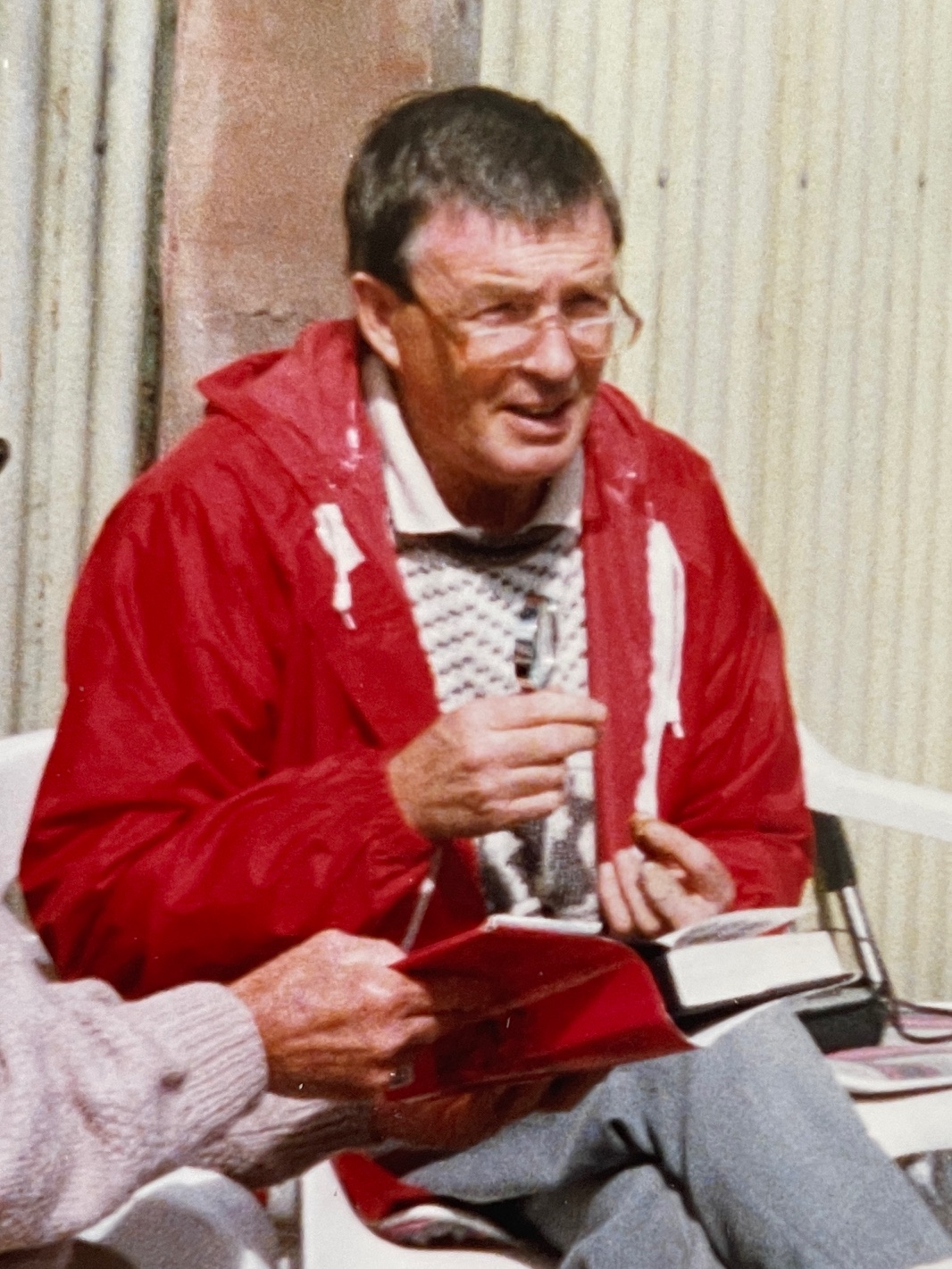
Herbert L. Kreindler (1935-2026) The Best Collection of Byzantine Coins Herbert L. Kreindler (1935-2026)
Born in Manhattan in 1935, but raised in Liberty, in the Catskill region of New York State, Herb graduated from Carnegie Tech in 1957 with a degree in Engineering. Employed by the Grumman Aircraft Engineering Corporation and recently married he moved to Suffolk County on Long Island, New York where he continued to live with his wife and family until shortly before his death. However, in the early 1970s, he boldly changed careers having decided to become a full-time professional numismatist specializing in ancient coins. From 1974-1983 he joined in partnership with David Hendin as proprietors of Amphora Coins after which he established a highly successful solo practice that remained active until his retirement some two years ago. Though expert in the full range of classical ancient coinage, and in later years even extended his interest to include medieval bracteate coinage as well as Jewish medals, Herb was particularly interested in coins of the Holy Land. In 1976 he collaborated with David Hendin providing the valuations for Guide to Ancient Jewish Coins, which in subsequent editions became Guide to Biblical Coins. “Herb’s knowledge of the value of ancient coins in general, and especially of Biblical coins was unsurpassed,” Hendin said. Herb was a proud and confident individual, scrupulously honest, and trustworthy in his commercial dealings. He was also widely known as “the numismatic auctioneer” in the United States having been invited to call hundreds of auctions by several premier American auction houses. In December 1997 Herb served as the auctioneer for the premier auction for Classical Numismatic Group – Triton I. He continued to bid call all of our Triton auctions through Triton XXIII in January 2020. His stamina was remarkable. He could stand at a podium all day and call an auction, taking very few breaks. Herbert Kreindler is survived by his wife of 69 years, the former Barbara Baker, two sons and a daughter, seven grandchildren and three great-grandchildren. Besides family and his many friends, Herb will be greatly missed by appreciative numismatic colleagues and fellow-collectors world-wide. Classical Numismatic Group, Inc. joins the whole numismatic community in mourning Herb’s passing. Chris Bailey, an Appreciation
Although his main interests lay within the fields of Iron Age and, particularly, Roman coins, Chris was an avid collector of a wide range of coins of all periods from ancient to medieval to modern. His collection has recently been painstakingly catalogued by David Holman, a leading numismatist in Kent. Sam Moorhead first met Chris around 1980 when he used to sell coins in the back of an antique shop in Sandgate. We spent many happy hours talking about coins and I learnt a great deal from him. Chris was also then an active member of the Kent Numismatic Society. There is no doubt that his favourite coins were those struck for the ‘British’ emperors, Carausius and Allectus. Not only did he acquire their pieces, but he also researched their coinage. In a short article in Spink’s Numismatic Circular (October 1981), Chris discussed various aspects of the coinage of Carausius. In direct contradiction to numerous scholars, many of them residing on the Continent, Chris suggested that the ‘Rouen’ coinage of Carausius dated to the beginning of his reign rather than later, as was commonly believed. His argument was taken up by John Casey and Andrew Burnett three years later in the British Numismatic Journal where they were able to use hoard evidence to show that Chris was correct. This early dating is now commonly accepted and Chris is given due credit in my recent edition of Roman Imperial Coinage for Carausius and Allectus. Chris also discussed the ‘C’ Mint, suggesting that C might stand for Classis (fleet) or Castrum (fort). His argument, like all those for identifying the ‘C’ Mint, has some problems but his suggestion of Classis did promulgate the concept of a moving mint, a possibility which is given serious consideration in RIC. His discussion of the ‘unmarked’ pieces of Carausius also gives food for thought about a highly complex group of coins. Chris is, therefore, one of several collectors who has made enormous contributions to our understanding of the coinage of Carausius and Allectus. If Chris’ contribution to the studies of Carausian coinage is significant, his collection of coins has proven to be equally important in the production of the new edition of Roman Imperial Coinage. I was kindly allowed to photograph several hundred pieces, many of which feature in the volume, some being the only specimen known. Because of the enormous number of varieties for the coinage of Carausius, every major collection will have unique or very rare specimens. Whilst photographing the coins, Chris was also able to impart a wealth of extra information about his coins, hoards and other finds. Amongst Chris’ collection was a small parcel of Tetrarchic nummi which David Holman realised were part of the famous Fyfield Hoard (Oxon), the major part which resides in the Ashmolean Museum at Oxford. Chris has very kindly donated these coins to the Ashmolean so they can be reunited with the rest of the coins. David Barwell, a local detectorist, first met Chris in 1985, having been introduced to him as “the” local coin expert! They became friends, and later Chris attended metal detecting rallies, carrying out coin identifications. As time progressed into the 1990s, David introduced Chris to the metal detecting club circuit where he was pleased to be involved and became a very respected and well-liked numismatist, especially when the recording of coins and artefacts gathered momentum with the advent of the Portable Antiquities Scheme (PAS). David writes: “The enjoyment for Chris, and myself, was being with our late summer detecting group for 10 days. Here, Chris would gaze at coins as they were found and recorded one by one. We would endure — and enjoy — the dry Chris Bailey humour and wit throughout the day and into the evening. Chris appears to many to be a very private person and is extremely modest, especially about his knowledge of coins. However, having spent many happy hours with him, I can say he is also a very sociable and likeable person. Listening to him as he identifies coins and talks about the Roman Emperors, anyone would think he knew them personally. I have even known Chris identify Roman coins over the telephone and then have the identification confirmed as accurate upon seeing the coin at a later date!” Chris is indeed an extremely kind, generous and modest person whose quiet demeanour conceals a razor-sharp mind. I hope that he will be able to appreciate the vital contribution his scholarship and collection have made to the understanding of the coinage of Carausius, and also his many days of coin identification which have contributed so much to our understanding of the past in Kent. Sam Moorhead, with contributions by David Barwell and David Holman. Laird U. Park, Jr.
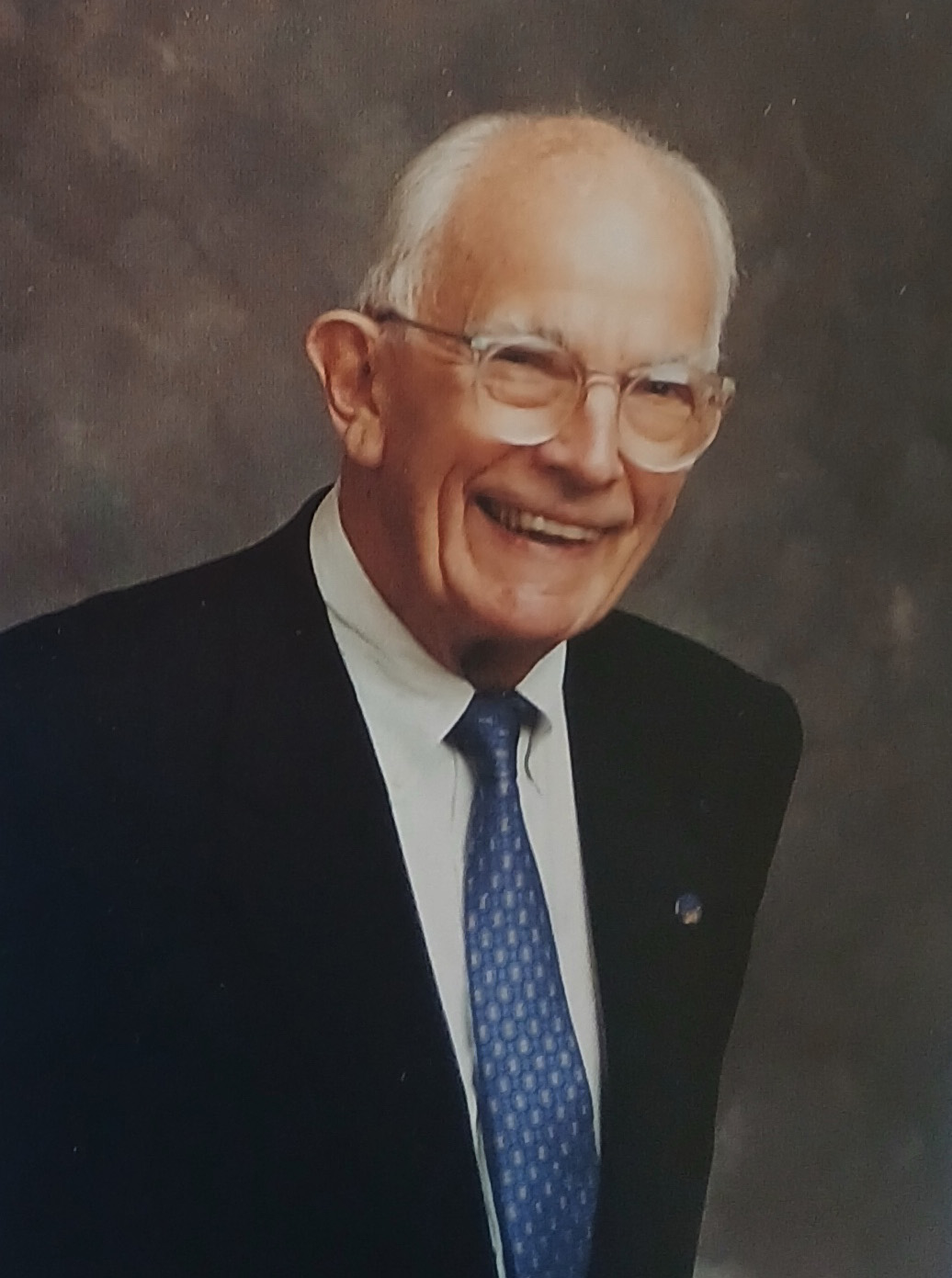
Laird served in the US Navy during WWII, then graduated from Princeton University with a degree in Economics. In the late 1950s he purchased and was CEO of Troemner, Inc, originally a manufacturer of precision weights and balances, now located in Thorofare, NJ. He and his wife, Lucy Lynch, raised four daughters in Villanova, PA. They loved animals, their pets, and enjoyed travel, tennis and summers boating in Chatham, MA. The Santa Monica Collection The Santa Monica Collector has a BS with a physics major from Iowa State University, and spent 44 years in the Aerospace Industry. The first 12 years were spent on core physics of nuclear reactors, intended for flight, mainly the Aircraft Nuclear Propulsion Program (ANP) and the Satellite Nuclear Auxiliary Program (SNAP) reactor, neither of which ever flew. He then transitioned to be a thermal analyst on the Command-Service Module of the Apollo Spacecraft, and was very much involved in that program. He then went to Rocketdyne, where he became the manager of the Space Shuttle Main Engine (SSME) aero-thermodynamics analysis, and later manger of thermal analysis of the Space Station electric power supply. This is why a major portion of the net proceeds from the SM Collection will go to the Iowa State University Foundation for Physics Scholarships and faculty support.His coin collecting interests started young, with a collection of mostly modern world coins gifted from brothers who had served in the military during World War II. The only ancients purchased at that time were a Roman Republican and an Imperial denarius, purchased in December of 1945. He notably had a Roman Imperial coin before his friend Barry Rightman, and a Republican coin before Ken Freidman. These facts were brought up during many personal exchanges with these good friends! Whereas Barry Rightman’s focus was on very high grade and well-struck Roman Imperial coins with great eye appeal, the SM Collection was focused on Greek, mainly silver, with an emphasis on artistic and numismatic interest. As the SM Collector approached retirement, he renewed his interest in coins. Since he had precious metal as an inflation hedge, and had an interest in Greek mythology, particularly goddesses and nymphs, an interest in Greek numismatics naturally followed. Accordingly, he became active in the Ancient Coin Club of Los Angeles, where he met the aforementioned Mssrs. Rightman and Freidman. The first Greek coin he purchased from a Joel Malter auction in 1992 featured the patron nymph of Terina. Along these lines, he endeavored to become a numismatic scholar, and made presentations to the ACCLA. One presentation was titled “Why the Staters of Olympia Should Be Considered Among the most Varied and Artistic of the Greek Coin Series.” A second presentation was titled, “How the Staters of Corinth Reflect the Changes in Greek Art from Archaic to Classical and Hellenistic Periods.” Both presentations were fully illustrated with coins from the Santa Monica Collection. The Santa Monica Collector looks forward to a substantial portion of his proceeds benefitting the Iowa State University Foundation and his other favored charities, and to seeing a new generation of collectors enjoy the fruits of his 30-year pursuit. Collection JLT The curator of Collection JLT is a retired physician. When he was ten years old, he found interesting US coins in change and started collecting foreign coins. Like many other collectors, he has always been more interested in coins related to historical topics. He got his first ancient coins at a show from David Michaels 30 years ago. Since that time, he has focused on ancient Greek coins with an interest in finding provenances not listed in recent auction descriptions, like some of the Magna Graecia coins in this sale. Since retirement, he has become president of a prominant ancient coin club and become more involved with numismatic research, having published three articles so far.The Best Collection of Byzantine Coins The Best Byzantine Collection was assembled and curated by a dedicated collector in California’s Bay Area. The collector was born in Fullerton, California, and, after Catholic grade and high school, enrolled at Cal-State Fullerton, where he majored in Biology and minored in Political Science. After college he moved to the SF Bay Area where he took an entry level position as an air pollution testing technician with a testing laboratory. After about eight years he started his own consulting firm and soon thereafter created his own testing laboratory to provide emissions testing services for local industries to demonstrate compliance with EPA, state and local environmental regulations.In the year 2000, he was going through a box of old curios and saw something he had forgotten: As a boy he had, like so many others, filled his Whitman folders with pennies, nickels and dimes. When he was eleven and doing some yard work for an elderly neighbor, the man mentioned that he had been in Italy during WWII. Once, when he and his fellow soldiers were under artillery fire, they were startled when a shell burst went off nearby and, along with the dirt raining down on them, they were showered with coins! He offered three of them as partial payment for the yard work. It would be much later that he learned that they were rather common late Roman bronzes. The collector has always been interested in ancient history. Finding these coins from his childhood sparked an interest, and entering “ancient coins” on his computer led him to Harlan J. Berk. The rest, as they say, is history. He attended a numismatic bourse in SF where he met Frank Kovacs, Ed Waddell, Victor England, Dave Michaels and other major dealers. Over the next 20-25 years he assembled an extensive collection mainly of Roman coins, with an emphasis on dynastic and architectural types, Greek coins favoring those of Sicily and southern Italy, and Byzantine as opportunities arose. The collector is mainly retired now and spends his time reading, checking off his extensive travel bucket list or lounging around the beach at his condo in Los Cabos. |