
Search in eAuction


CNG Bidding Platform

Information

Products and Services


Use Old Home Page

eAuction
Electronic Auction 599

Lot nuber 322

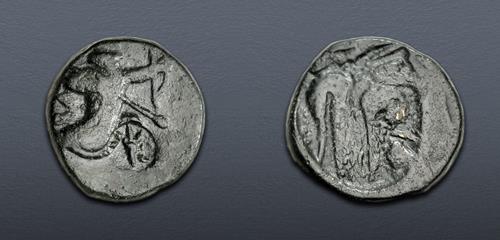
PERSIA, Achaemenid Empire. temp. Artaxerxes III to Darios III. Circa 400-375/50 BC. Æ Unit (12mm, 2.38 g). Uncertain mint in western Asia Minor (Ionia or Sardes?). VF.


Electronic Auction 599
Lot: 322.
 Estimated: $ 100

Greek, Bronze

Sold For $ 100. This amount does not include the buyer’s fee.

Go to Live

PERSIA, Achaemenid Empire. temp. Artaxerxes III to Darios III. Circa 400-375/50 BC. Æ Unit (12mm, 2.38 g). Uncertain mint in western Asia Minor (Ionia or Sardes?). Persian king, wearing kidaris and kandys, in kneeling-running stance right, holding spear and bow; BA to left; c/m: star within incuse circle / Incuse rectangle, containing pattern possibly depicting relief map of the hinterland of Ephesos. Bodzek pl. IX, 3; Johnston, Earliest, Æ 1–4; Mildenberg, Münzwesen pp. 25–6 and pl. XIII, 112; Sunrise –. Dark green patina, a little off center, cleaning scratches. VF.

Johnston has interpreted this remarkable reverse design as a relief map of the hinterland of Ephesos, which would make it the earliest Greek map and first physical relief map known. On the right (north) are the mountains Tmolos and Messogis between the river valleys of the Caÿster and Maeander, to the left of which are three mountain ridges (Madranbaba Dagi, Karincali Dagi, and Akaba Tepesi). Johnston follows Six in suggesting that the coins were probably struck under the Persian general Memnon at Ephesos, circa 336-334 BC, in order to pay his army after he had captured the city, but before his defeat by Alexander at the Battle of Granicus in 334. However, Johnston’s map theory has been the subject of some doubt, most notably by Leo Mildenberg.

Closing Date and Time: 12 November 2025 at 11:47:00 ET.

All winning bids are subject to a 20% buyer’s fee.