|
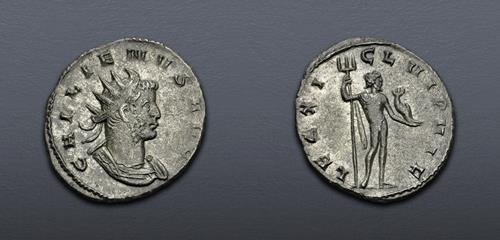
Gallienus. AD 253-268. Antoninianus (20mm, 3.44 g, 6h). “Legionary series” issue. Mediolanum (Milan) mint. 2nd emission, AD 261. Good VF.
Electronic Auction 616
Lot: 862.
Closing Date: Sep 2 2026 10:00 ET
The Steve Rubinger Collection of Gallienus, Silver
Estimate: $ 150
BID NOW
|
|
Gallienus. AD 253-268. Antoninianus (20mm, 3.44 g, 6h). “Legionary series” issue. Mediolanum (Milan) mint. 2nd emission, AD 261. Radiate and cuirassed bust right / LEG XI CL VI P VI F, Neptune standing right, holding trident and dolphin. RIC V 359; MIR 36 1014r; Toffanin 109/4; RSC 535. Toned. Good VF.
From the Steve Rubinger Collection.
Legio XI Claudia was another Caesarian foundation, serving with him in Gaul from 58 BC and through the subsequent civil war, until its first disbandment in 45 BC. Like several other of Caesar’s legions, it was reconstituted by Octavian circa 43 BC and served him through the subsequent Trimviral era and the Antonian civil war of 32-30 BC. After the Varian disaster of AD 9, Legio XI was shifted from the Balkans to Dalmatia to shore up the endangered frontier. Along with its sister Legio VII, it became embroiled in a plot against Claudius in AD 42, but ultimately remained loyal to him and thus won the epithet Claudia Pia Fidelis. In AD 69 it staged a lightning invasion of Italy in support of Vespasian and won the Second Battle of Bedriacum over the legions of Vitellius. For some decades thereafter it was based at Vindonissa (modern Windisch) in upper Germany before settling into a new camp at Durostorum (modern Silistra, Bulgaria) circa AD 106. It remained steadfastly loyal to Gallienus in the chaotic mid third century AD. It was still at Durostorum circa AD 400, as recorded in the Notatia Dignitatum. Unusual for a Caesarian legion, its symbol was not a bull, but the sea god Neptune.
Closing Date and Time: 2 September 2026 at 14:47:00 ET.
All winning bids are subject to a 20% buyer’s fee.
|
