|
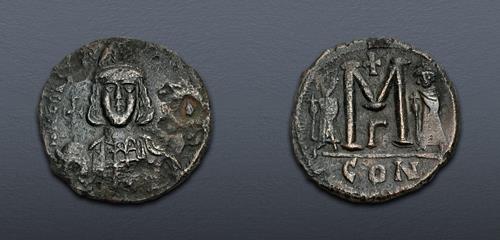
Constantine IV Pogonatus, with Heraclius and Tiberius. 668-685. Æ Follis (34.5mm, 15.38 g, 6h). Constantinople mint, 3rd officina. Struck 668-673. Near VF.
Keystone 17 – The W. Toliver Besson Collection
Lot: 317. Estimated: $ 150
Byzantine, Bronze
Sold For $ 550. This amount does not include the buyer’s fee.
Go to Live
|
|
Constantine IV Pogonatus, with Heraclius and Tiberius. 668-685. Æ Follis (34.5mm, 15.38 g, 6h). Constantinople mint, 3rd officina. Struck 668-673. Helmeted and cuirassed bust facing, holding globus cruciger / Large M, cross above; flanked by crowned facing figures of Heraclius and Tiberius, both wearing chlamys and holding globus cruciger; Γ//CON. DOC 28c; MIB 77; SB 1173. Dark brown surfaces, corrosion. Near VF.
From the W. Toliver Besson Collection. Ex Freeman & Sear inventory B3925 (2 February 2012).
To Constantine IV belongs credit for finally stemming the Muslim tide that threatened to sweep away the Byzantine Empire and roll over all of Europe in the later seventh century. The eldest son of Constans II, he faced a host of crises upon his succession, mainly the loss of the Empire’s richest provinces, the decimation of the Byzantine navy, and a badly depleted set of resources and options. He fought back with energy and ingenuity, preparing Constantinople for the inevitable siege that commenced six years after his accession, in AD 674. There the Byzantines unleashed a “secret weapon,” Greek Fire, an incendiary mixture that could be projected through tubes as with a modern flame-thrower. It caught the Arab fleet utterly unprepared and caused the first great Muslim defeat since the Hejira. Constantine’s army also defeated the Arabs on land in Asia Minor and forced the Caliph to sign a 30-year peace treaty on terms favorable to the Byzantines. Constantine had to cede much of the Balkans to the new Bulgarian tribe, however, a development that boded ill for the future. One of the best of the early Byzantine rulers, Constantine died young at age 33, leaving the throne to his mercurial son Justinian II. His nickname Pogonatus (”Bearded”) is possibly a bit of a misnomer as, judging from his coin portraits and a mosaic depicting him in Ravenna, he was either clean-shaven or wore a relatively short beard. It is perhaps more aptly applied to his father, Constans II, who was exceedingly hirsute.
Constantine IV also made a valiant effort to restore the Byzantine coinage after decades of decline. He struck both gold solidi of much improved workmanship and an impressive bronze follis restored to its size and weight as during the reign of Justinian I the Great, an example of which is offered here.
Closing Date and Time: 22 July 2026 at 11:45:20 ET.
Winning bids are subject to a 22.5% buyer's fee for bids placed on this website, 25% for all others.
|
