|
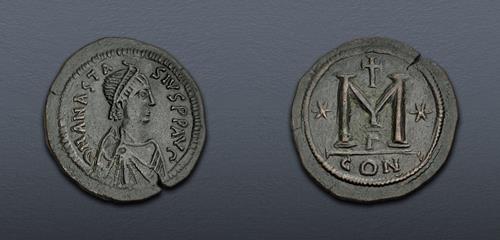
Anastasius I. 491-518. Æ Follis (36mm, 17.80 g, 6h). Constantinople mint, 3rd officina. Struck 512-517. Diademed, draped, and cuirassed bust right / Large M, cross above; stars flanking; Γ//CON. DOC 23d; MIBE 27; SB 19. Dark brown-green patina, minor flan crack. Good VF.
From the W. Toliver Besson Collection, purchased from Tom Cederlind, 6 September 2012.
Anastasius came to the East Roman throne as a career civil servant and quickly displayed an administrator’s aptitude for tinkering with government efficiency, and thereby bolstering the treasury. Upon his accession, the Roman bronze coinage had fallen into a deplorable state, mainly confined to tiny, poorly made nummi of fluctuating value relative to the standard gold coin of the realm, the solidus. These minuscule bronzes, weighing less than a gram, were valued at between 7,000 and 8,400 to the solidus, Twenty nummi were required to buy a bread roll and hundreds or thousands were needed for other everyday transactions. Anastasius retained the nummus as a basic unit, but in AD 498 undertook a major reform creating a series of new bronze denominations, each clearly marked with a Greek letter denoting the number of nummi each coin was worth. M, the Greek numeral for 40, appeared on the back of the largest of these new bronzes, the follis; also struck were the half-follis, marked with a K (20), the 10-nummis piece, or decannumia, marked with an I (10), and a 5-nummis piece (pentanummia), marked with an ϵ (5). The reform took place in two stages; the first version of the follis was an intermediate-sized coin of around 24 mm and 8-10 grams in weight. After AD 512, this was replaced by a much larger coin of around 35-40 mm and double the weight of the earlier issue. The rate of exchange was now fixed at 180 folles to the solidus. The number of mints was also greatly increased, with the reverse of each coin carrying a mint mark and a Greek letter denoting the workshop, or officina, where it was struck. Anastasius’ coinage reform does indeed seem to have increased government revenues, as the emperor famously left his successor a full treasury and substantial annual budget surplus. Its effect on the common people is less clear, with some chroniclers at the time complaining that the new coinage system had further impoverished the poor.
Closing Date and Time: 22 July 2026 at 11:43:40 ET.
Winning bids are subject to a 22.5% buyer's fee for bids placed on this website, 25% for all others.
|