|
Contorniates. Late 4th-5th centuries AD. Æ Contorniate (38mm, 40.61 g, 4h). Good VF.
Keystone 17 – The W. Toliver Besson Collection
Lot: 308. Estimated: $ 1 500
Roman Contorniates, Bronze
Sold For $ 5 500. This amount does not include the buyer’s fee.
Go to Live
|
|
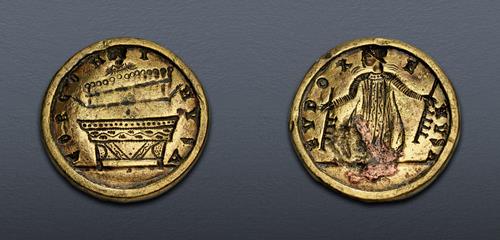
Contorniates. Late 4th-5th centuries AD. Æ Contorniate (38mm, 40.61 g, 4h). GORGON I MVSA, Gorgonius standing behind and playing a hydraulis (water organ); all in incuse / EVDOX E MVSA, the tibicen (tibia player) Eudoxius standing facing on ground line, head left, wearing chiton and holding tibia in each hand; all in incuse. Alföldi, Kontorniat – (but cf. rev. dies 221-5 for hydraulis, and no. 654-5 for tibicen). Toned brassy surfaces, slight porosity, areas of deposits. Good VF. Unique.
From the W. Toliver Besson Collection. Ex Classical Numismatic Group 127 (17 September 2024), lot 639.
Musicians, mimes, and dancers were as much of a fixture of the Roman circus as the races themselves. Though not as popular a theme for contorniates, there are a limited number of types that depict or name musicians. Among them are five dies that depict the hydraulis, or water organ. Invented by Ctesibius of Alexandria in the third century BC, the hydraulis is the first instrument to use a keyboard. Water would be pumped through a bellows into a chamber where it would compress air, forcing it through pipes of varying lengths to produce notes, which were controlled by the keys. The present piece depicts the instrument and it’s player Gorgonius in incuse and is entirely unrecorded. The reverse features a standing figure of Eudoxius, a tibicens or double-flute player, holding each flute separately in his hands. Two other incuse examples are known with this type, both naming the musician Makarius.
Closing Date and Time: 22 July 2026 at 11:42:20 ET.
Winning bids are subject to a 22.5% buyer's fee for bids placed on this website, 25% for all others.
|
