|
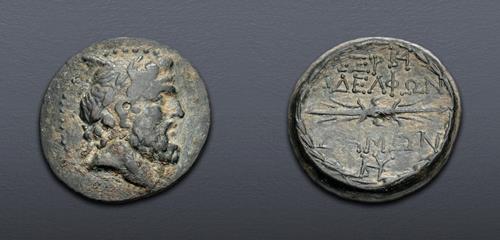
SELEUKIS and PIERIA, Antioch and Seleukeia Pieria. 149/8–147/6 BC. Æ (21mm, 7.47 g, 12h). Adelphoi Demi ("The Brother Peoples") issue. Dated SE 165 (148/7 BC). VF.
Electronic Auction 611
Lot: 365. Estimated: $ 100
Greek, 12h, Bronze
Sold For $ 70. This amount does not include the buyer’s fee.
Go to Live
|
|
SELEUKIS and PIERIA, Antioch and Seleukeia Pieria. 149/8–147/6 BC. Æ (21mm, 7.47 g, 12h). Adelphoi Demoi ("The Brother Peoples") issue. Dated SE 165 (148/7 BC). Laureate head of Zeus right / Thunderbolt; EΞP (date) and monogram above, monogram below; all within wreath. HGC 9, 1396; DCA2 344; SNG München 578; Dow, ACTTB, p. 107 (this coin). Earthen dark green patina. VF.
From the Joseph A. Dow Collection. Ex J. S. Wagner Collection (Classical Numismatic Group Electronic Auction 203), lot 180.
The identification of the issuing city/cities of this coinage has long been debated. Since Strabo (16.2.4) mentioned that Seleukeia, Antioch on the Orontes, Apameia on the Orontes, Laodikeia ad Mare, and Seleukeia Pieria were called sisters due to the concord between them, E. Babelon and W. Wroth considered this coinage as evidence of a tetrarchy composed of these cities. However, since these coins were only found in Seleukeia and Antioch, A. Bellinger concluded that they could not have been struck in the four cities, and rather were evidence of an alliance between only the two, Seleukeia and Antioch. Bellinger also concluded that this was evidence of a decline in the power of the Seleukid kingdom. K.J. Rigsby and O. Mørkholm both agreed with Belllinger’s conclusion that this coinage represented a league between the two cities, but thought that it represented an increase in the power of the Seleukid king; Alexander I Balas seems to have restricted the authority of the cities to strike a purely municipal coinage, which ended with the inception of this Adelphoi Demoi coinage. (For a full discussion on the debate over this coinage, see G. M. Cohen, The Hellenistic Settlements in Syria, the Red Sea Basin, and North Africa (Berkley, 2006), pp. 82 and 132, n. 12.)
The present coin is published in Joseph A. Dow, Ancient Coins Through the Bible (Mustang, OK: Tate, 2011), in the chapter The Greek Empire. CNG is pleased to offer coins from the collection of the author here, and in subsequent electronic auctions.
Closing Date and Time: 17 June 2026 at 12:01:20 ET.
All winning bids are subject to a 20% buyer’s fee.
|
