|
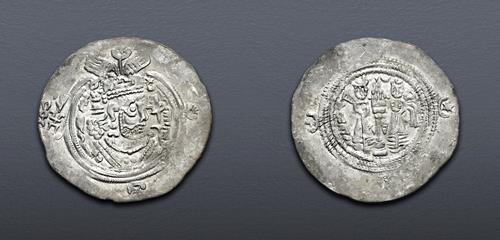
HUNNIC TRIBES, Hephthalites. Later Hephthalites. Before AD 700. AR Drachm (34mm, 3.24 g, 3h). Imitating a Post-Yazdgerd year 67(?) drachm from the BBA mint. VF.
Electronic Auction 609
Lot: 388. Estimated: $ 100
Central Asian, Silver
Sold For $ 100. This amount does not include the buyer’s fee.
Go to Live
|
|
HUNNIC TRIBES, Hephthalites. Later Hephthalites. Before AD 700. AR Drachm (34mm, 3.24 g, 3h). Imitating a Post-Yazdgerd year 67(?) drachm from the BBA mint. Crowned Sassanian style bust right; c/ms: Sogdian legend and tamgha / Fire altar flanked by attendants; star and crescent flanking flames. Vondrovec [Göbl, Hunnen] –; CNG 60, 1095; for c/m: Göbl, Dokumente KM79. Lightly toned, light deposits. VF. The original countermarks are now part of the obverse die.
From the James A. Lock Collection.
In AH 61, Salm bin Ziyad was appointed Governor of Khurasan by the Umayyad caliph Yazid I. Three years later, bin Ziyad was deposed and replaced by ‘Abd Allah bin Khazim. The new governor quickly threw in his lot with the rebel faction led by bin Zubayr, dragging Khurasan into internecine conflict. Meanwhile, the Hepthalites took advantage of Arab distraction and invaded the region. In such a fractured state, Khurasan could not resist the Huns, and the whole of the province fell under Hepthalite control for a brief period.
This coin and related imitations (cf. CNG 60, 1090-6) were struck after the deposition of bin Ziyad in the same Khorasanian locality, by the same Sogdian speaking peoples. The group minting these imitations was plainly impartial to whether the prototype was Sasanian (with Khusro II types) or Arab-Sasanian, imitating either ‘Abd Allah bin Khazim or Salm bin Ziyad. However, the omnipresence of the tamgha and Sogdian legends (in countermark or engraveur) indicates that an association with Sogdian Hephthalite groups is the most important factor in the coins' identity.
Closing Date and Time: 13 May 2026 at 12:09:00 ET.
All winning bids are subject to a 20% buyer’s fee.
|
