|
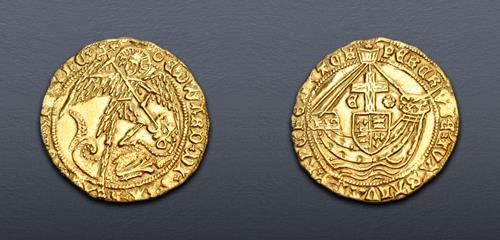
YORK (Restored). Edward IV. Second reign, 1471-1483. AV Angel (28mm, 5.15 g, 12h). Type XIV. Tower (London) mint; im: annulet. Struck 1471-1472. VF.
Keystone 16 – The David C. Bianchi II Collection
Lot: 144.
Closing Date: May 20 2026 10:00 ET
British – Lancaster & York, Gold
Estimate: $ 2 000
BID NOW
|
|
YORK (Restored). Edward IV. Second reign, 1471-1483. AV Angel (28mm, 5.15 g, 12h). Type XIV. Tower (London) mint; im: annulet. Struck 1471-1472. Archangel Michael slaying the dragon to right with spear terminating in cross crosslet / Ship bearing shield and cross, Є and rose flanking cross. Webb Ware dies 7/8; Blunt & Whitton type XIV; Schneider 454 (same rev.); North 1626; SCBC 2091. Polished, edge marks. VF.
From the David C. Bianchi II Collection. Ex Coin Galleries FPL (Winter 1981/2), no. 153.
The restoration of Edward IV to the English throne was one episode in the thirty-year dynastic conflict known to history as the “Wars of the Roses” (1455-1485). So-named because of the roses employed by the competing houses – a red one for the Lancastrians and a white one for the Yorkists – the war was the result of the conflict that occurred between the sons of Edward III and their respective descendants in competition for the English throne. Beginning with the deposition in 1399 of Richard II by Henry Bolingbroke (subsequently Henry IV), the Lancastrian branch became the ruling family. The untimely death of Henry’s successor, Henry V in 1422, left the throne to the infant Henry VI. Until 1437, when he achieved his majority, the country was ruled by regents; after this, Henry’s own inability to rule effectively, as well as his personal insanity, created a volatile political instability that allowed for the rise of the Yorkists. In 1461, Henry VI was deposed by Edward, Duke of York, who became Edward IV. Edward, through the support of his cousin, Richard Neville, Earl of Warwick (“The Kingmaker”) consolidated his position as king, but the two fell out over Edward’s marriage to Elizabeth Woodville, the widow of a Lancastrian sympathizer. Warwick rebelled, capturing Edward, but subsequently being compelled by the nobles to release him. In 1470, Warwick again rebelled, restoring Henry VI (who had been in the Tower since 1465) again briefly to the throne. Following the decisive Battle of Tewkesbury on 4 May 1471, Edward IV was restored as king and Henry VI, deposed for the final time, was re-imprisoned in the Tower, where he died a little over two weeks later. Edward and the House of York now ruled unopposed, since direct Lancastrian opposition had been checked. Only Henry Tudor, the great-great grandson of John of Gaunt, remained – an exile in France.
Closing Date and Time: 20 May 2026 at 10:47:40 ET.
Winning bids are subject to a 22.5% buyer's fee for bids placed on this website, 25% for all others.
|
