|
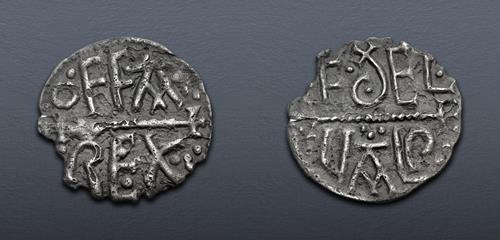
ANGLO-SAXON, Kings of Mercia. Offa. 757-796. AR Penny (17mm, 1.02 g, 6h). Light coinage. London mint; Æthlweald, moneyer. Struck circa 785-792/3. Near VF.
Keystone 16 – The David C. Bianchi II Collection
Lot: 45.
Closing Date: May 20 2026 10:00 ET
British – Anglo-Saxon & Norman, Silver
Estimate: $ 750
BID NOW
|
|
ANGLO-SAXON, Kings of Mercia. Offa. 757-796. AR Penny (17mm, 1.02 g, 6h). Light coinage. London mint; Æthlweald, moneyer. Struck circa 785-792/3. OFFA/REX divided by beaded bar with crosses at ends / EdEL/ЧALP divided by beaded bar with crosses at ends; trefoil near center. Chick 13j = SCBI 20 (Mack), 561; North 287/1; SCBC 904. Toned, edge loss, some porosity. Near VF. Rare.
From the David C. Bianchi II Collection. Ex R.P. Mack Collection (not in Glendining sales); F.A. Walters Collection (Sotheby & Co., 24 October 1932), lot 34. Possibly ex H. Howard (†1738) Collection (Sotheby, Wilkinson, & hodge, 20 May 1874), lot 1.
During the eighth century AD, Mercia, under its king, Offa (757-796), was the largest and most powerful Anglo-Saxon kingdom in England. As such, this kingdom maintained diplomatic and cross-cultural, and economic contacts with the Carolingian Empire on the Continent (see J. Nelson, “Carolingian Contacts,” in M.P. Brown and C.A. Farr, Mercia [London & New York, 2005]). The coinage reform that began under Pepin I and was implemented by his son and successor, Charlemagne, produced deniers struck on broad flans of good metal. This new coinage became the denominational standard throughout the Carolingian Empire, replacing the earlier, smaller Merovingian silver issues and the sceats found in northern Europe and across the English Channel. In Anglo-Saxon England, these earlier coin types were replaced with a new denomination, the penny. Based on the Carolingian denier, these coins first appear in two very rare issues of the Kentish kings, Heaberht and Ecgberht. It was Offa, however, who introduced the penny to a much wider audience in England, with both heavy and light issues in various portrait and non-portrait types. So successful was this new denomination that it continued to be the sole English silver denomination until the introduction of the groat, halfpenny, and farthing under Edward I in 1279.
Closing Date and Time: 20 May 2026 at 10:14:40 ET.
Winning bids are subject to a 22.5% buyer's fee for bids placed on this website, 25% for all others.
|
