|
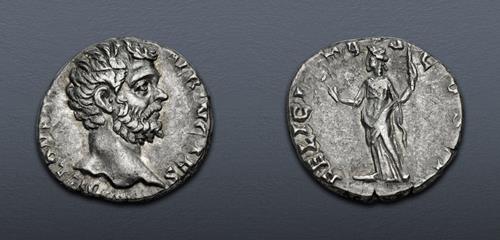
Clodius Albinus. As Caesar, AD 193-195. AR Denarius (17mm, 3.13 g, 6h). Rome mint. Struck under Septimius Severus, AD 194-195. VF.
Keystone 16 – The David C. Bianchi II Collection
Lot: 18.
Closing Date: May 20 2026 10:00 ET
British – Roman Period, Silver
Estimate: $ 150
BID NOW
|
|
Clodius Albinus. As Caesar, AD 193-195. AR Denarius (17mm, 3.13 g, 6h). Rome mint. Struck under Septimius Severus, AD 194-195. Bare head right / Felicitas standing left, holding caduceus and long scepter. RIC IV 4; RSC 15. Iridescent toning, tight flan. VF.
From the David C. Bianchi II Collection. Ex Classical Numismatic Group Electronic Auction 18 October 2006), lot 272.
In AD 193, shortly after hearing of the assassination of Pertinax and subsequent elevation of Didius Julianus, Clodius Albinus, who was then governor of Britain, began preparations to seize the throne for himself. At the same time, Septimius Severus, the governor of Upper Pannonia, had been declared emperor by his troops and was preparing to march on Rome. Upon hearing of Albinus’ plans, Septimius offered him the rank of Caesar and heir to the throne should Albinus join him. Albinus must have sensed that Septimius had stronger support than himself and prudently agreed. Septimius marched on Rome and entered the city without resistance soon after Julianus was killed on 1 June.
After securing the capital, Septimius proceeded to issue a series of coins from Rome, including an issue for his Caesar, Albinus. That short issue was superseded by a second issue beginning in January, AD 194, when Albinus and Septimius jointly served as consul, each for the second time.
The harmony between the two was short-lived. Both had different ambitions, Clodius to become emperor himself, Septimius to establish his family as the ruling house, and the arrangement seemed only necessary insofar as to give each the time to prepare to accomplish their own goal. While Septimius was away in the east fighting Pescinnius Niger, he learned of Albinus’ machinations against him and responded by breaking their arrangement and elevating his own son, Caracalla, to the rank of Caesar. Albinus responded by declaring himself Augustus, rallying his troops in Britain, and began marching on Rome. His forces were stalled by resistance in Gaul as Septimius moved west. Eventually the two armies, comprising over 100,000 men, met on the fields outside Lugdunum (Lyon) on 19 February AD 197. After making initial gains, Albinus’ army was routed, and he committed suicide when he became trapped in a house near the Rhône.
Closing Date and Time: 20 May 2026 at 10:05:40 ET.
Winning bids are subject to a 22.5% buyer's fee for bids placed on this website, 25% for all others.
|
