The Ostrogoths were one of a number of Germanic tribes that ravaged the Roman Empire while under the domination of the Huns. After the Hunnic kingdom fell in AD 454, the Ostrogoths were settled in northern Pannonia as foederati. In AD 488, the emperor Zeno called on the Ostrogothic king, Theoderic, to overthrow Odovacar, who had been ruling Italy for the emperor, but had recently become an opponent. Theoderic complied, and hostilities lasted until Odovacar was finally defeated in AD 493. Theoderic was to rule Italy until the emperor arrived, but Zeno died before this occurred. As a result, the Ostrogoths established their own kingdom in Italy, under the authority of the emperor in Constantinople. Over the first thirty years, under Theoderic and then his grandson, Athalaric, Italy experienced a period of relative tranquility. The prosperity of the kingdom was shattered in AD 535, when the Byzantine emperor Justinian I sent his general Belisarius to return Italy to ‘Roman’ rule. Although Belisarius was on the brink of accomplishing this goal, Justinian was forced to recall him to lead the imperial forces against the Persians in the east. Afterward, a quick succession of inept kings followed, until Baduila ascended the throne in AD 541. A popular king, he restored most of Italy to the Ostrogoths and sparked a revival of their fortunes, but was eventually killed in action against the Byzantines at Busta Gallorum in AD 552. His successor, Theia, died that same year, and only a few independent pockets of Ostrogothic resistance held out until the last stronghold was taken in AD 562.
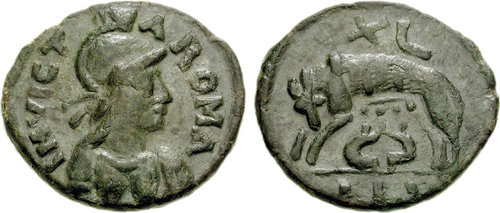
OSTROGOTHS. Athalaric. AD 526-534. Æ 40 Nummi (10.34g, 12h). Struck circa AD 526-534. Rome mint, 1st officina. Helmeted and cuirassed bust of Roma right, seen from front / She-wolf standing left, head right, suckling Romulus and Remus; XL above, • I • in exergue. COI 82a; MEC 1, 93-96 var. (same).
