|
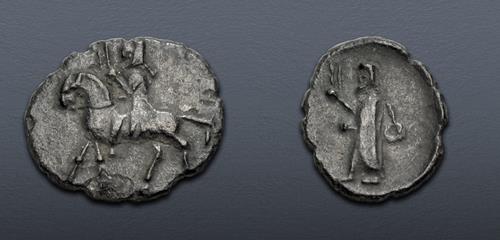
PERSIA, Achaemenid Empire. Uncertain satrap. Circa 400-333 BC. AR Twenty-fourth Stater – Hemiobol (9mm, 0.32 g, 4h). Uncertain mint in Asia Minor. VF.
Electronic Auction 599
Lot: 328. Estimated: $ 100
Greek, Silver
Sold For $ 1 400. This amount does not include the buyer’s fee.
Go to Live
|
|
PERSIA, Achaemenid Empire. Uncertain satrap. Circa 400-333 BC. AR Twenty-fourth Stater – Hemiobol (9mm, 0.32 g, 4h). Uncertain mint in Asia Minor. Satrap on horseback riding left / Satrap standing left, holding uncertain object; linear symbol to right. J. Bodzek “On Two Lesser-Known Satrapal Issues” in Notae Numismaticae X (2015), fig. 5a–c (Tarsos); Brindley Collection 228 (Tarsos); otherwise, unpublished in the standard references. Find patina. VF. Extremely rare, only three known to Bodzek (including the Brindley coin).
While Brindley and Bodzek place this piece at Tarsos, the attribution is based on an association of the obverse type with that found on the early staters of Tarsos. There are two arguments that suggest this may be incorrect. First, the staters typically bear the ethnic of Tarsos or a linear symbol like an ankh that is usually found on these issues (possibly the symbol of the family of Syennesis). The linear symbol here, which is often described as a hook, is very similar to that found on the issues of Autophradates from an uncertain mint in Ionia (see, e.g., Winzer 11.7–8). Such linear devices may be associated with Persian noble families, and such a hook-like device is unknown on any issues in Cilicia. Therefore, the present issue is probably unrelated to Syennesis of Tarsos, and is perhaps connected to Autophradates.
Closing Date and Time: 12 November 2025 at 11:49:00 ET.
All winning bids are subject to a 20% buyer’s fee.
|
