|
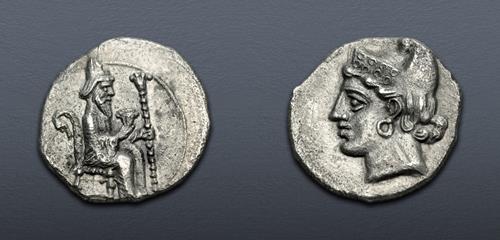
PERSIA, Achaemenid Empire. temp. Artaxerxes III to Darios III. 343-332 BC. AR Twelfth Stater – Obol (10mm, 0.64 g, 3h). Uncertain mint in Cilicia (Myriandros?). Good VF.
Electronic Auction 599
Lot: 325. Estimated: $ 100
Greek, Silver
Sold For $ 1 300. This amount does not include the buyer’s fee.
Go to Live
|
|
PERSIA, Achaemenid Empire. temp. Artaxerxes III to Darios III. 343-332 BC. AR Twelfth Stater – Obol (10mm, 0.64 g, 3h). Uncertain mint in Cilicia (Myriandros?). King of Persia (Artaxerxes III?) seated right on throne with back terminating in griffin’s head, wearing double crown, holding a lotus flower and lotus-tipped scepter / Youthful male head (Artaxerxes IV?) left, wearing earring and double crown. Bodzek pl. VII, 12; Göktürk 35; SNG BN 429. Lightly toned, traces of find patina, a hint of porosity, slightly off center, hairline and slight die shift on reverse. Good VF.
Although this issue has long been known, it was only in 2000 that the types were properly interpreted (F. L. Kovacs, “Two Persian Pharaonic Portraits,” JNG L [2000], pp. 55-60). Kovacs argues that the crown being worn by both the figure on the obverse and reverse is none other than the atef crown of the Pharaohs, a composite headdress signifying their rule over Upper and Lower Egypt. Logically, this coin would have to date to the Thirty–First Dynasty, when Egypt was ruled by the Achaemenids following the overthrow of Nektanebo II, the last native pharaoh of Egypt. Kovacs suggests the figure on the obverse is Artaxerxes III Ochos, and that on the reverse is Artaxerxes IV Arses. The issue may have been struck to commemorate Artaxerxes IV’s elevation to crown prince (circa 343-338 BC) or on his succession (336 BC).
Closing Date and Time: 12 November 2025 at 11:48:00 ET.
All winning bids are subject to a 20% buyer’s fee.
|
